Seamless Power: How Bluetooth 5.2 and Battery Management Unlock All-Day Open-Ear Audio
Update on Dec. 12, 2025, 9:43 p.m.
Welcome! If you’ve been using wireless headphones for a while, you know the absolute truth: stability is the #1 feature. Nothing ruins a workout or a commute faster than a stuttering connection, unexpected disconnection, or the sinking feeling when your low-battery warning kicks in with no power outlet in sight.
For open-ear bone conduction headsets, stability and efficiency are even more critical. Their frames must be ultra-light (like the PURERINA X14’s 30 grams), which means the battery must be compact. The entire system has to be a masterclass in efficiency.
If stability is the foundation, what is the engine driving it? The secret is the Bluetooth 5.2 chip, and the magic it does with energy.
Section 1: The Efficiency Engine—How Bluetooth 5.2 Unlocks 6 Hours of Power
Older Bluetooth standards (4.x) were energy hogs, constantly draining power even when idle. The arrival of Bluetooth 5.2 introduced a game-changing protocol: LE Audio (Low Energy Audio).
The inclusion of a Bluetooth 5.2 chip in a headset like the X14 is your guarantee of two things:
- Connection Stability: Bluetooth 5.2 supports faster data transfer rates and better packet prioritization, meaning your audio stream is less likely to be interrupted by external wireless interference—a huge win for runners in busy city environments.
- The 6-Hour Math: The X14 comes with a 230mAh lithium battery. In the past, a battery this size would struggle to deliver more than 4 hours of continuous playback. The Bluetooth 5.2 LE mode optimizes the chip’s power draw, allowing the headset to operate with remarkable efficiency. This is why the X14 can reliably deliver up to 6 hours of continuous music and calls from a compact battery that charges fully in about 2 hours. This efficiency is the non-negotiable science behind the convenience.
Efficient power use creates a stable connection, but sometimes the system itself creates stability problems.
Section 2: System Stability and Connectivity Traps
While Bluetooth 5.2 is designed for stable connectivity, bone conduction headsets—especially those capable of multi-device pairing—can sometimes run into user interface traps that cause unexpected issues.
The Multi-Device Trap:
Some bone conduction headsets are capable of remembering and attempting to connect to multiple devices (like your phone and your tablet) simultaneously. A common user frustration, often cited in reviews, is when the headset automatically connects to an inactive device that is still within range (e.g., your child’s tablet at home) while you are actively using your phone outside. This can lead to random disconnections or the headset powering down prematurely.
- Mentor Tip: Manage Your Pairings. Until you actively need a second device, it is always a best practice to keep the headset paired to your primary device only. If you do need to use a second device, ensure the first is truly out of range or has its Bluetooth turned off. This simple management strategy ensures that the connection remains dedicated and stable.
The Low Battery Warning:
Battery anxiety is real. You need to know how much time you have left when the headset finally alerts you. For a product like the X14, the low battery voice prompt begins when the power drops to around 10%. User feedback suggests that once the voice prompt of “low battery please recharge” begins, you have approximately three to four minutes of use before the headset powers itself off. This is a narrow window, but knowing the precise time frame allows you to plan that final stretch of your run or close out your call.

The advanced Bluetooth 5.2 chip in the PURERINA X14 is the key to its stable connection, ensuring a seamless and fast audio transmission for active users on the go.
Section 3: The Practical UI Guide—Mastering Hidden Settings and Warnings
Hardware and system stability are key, but a good mentor must also guide you through the less intuitive parts of the user experience—the hidden settings and controls.
1. The Hidden Language Switch:
One of the most frequent setup frustrations for entry-level global electronics is the default language. The manual for the PURERINA X14 Flagship Bone Conduction Headphones provides a specific, non-intuitive command to fix this:
- The Command: Do not connect to Bluetooth after power on, and click the “+” button four times in a row, the headphones will automatically switch the language.
2. Volume Safety Check:
Many modern operating systems now provide direct visual feedback on your device when you are listening at unsafe decibel levels. Your phone’s volume indicator may switch color (e.g., from blue to red) to indicate that the volume is exceeding safe acoustic limits. This is a critical safety feature for bone conduction users who may be tempted to increase volume to overcome loud environments, potentially causing the “tickle” or increasing the risk of long-term hearing stress.
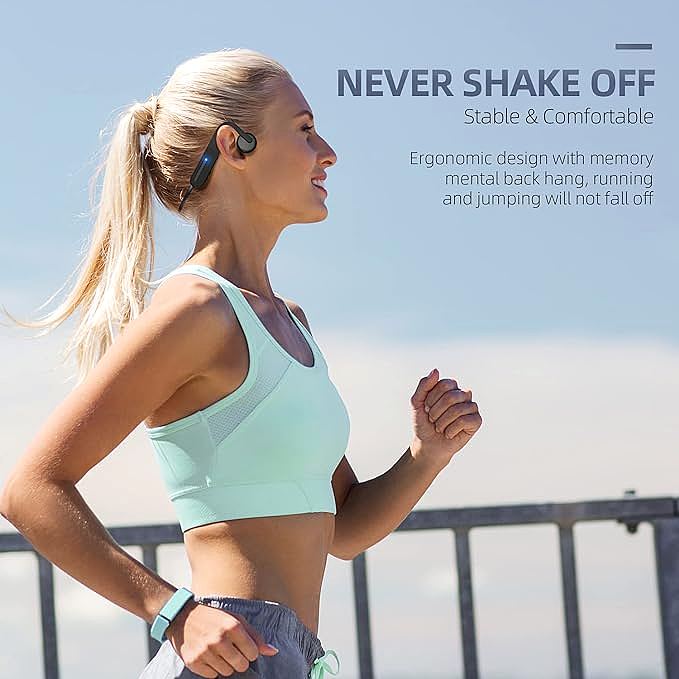
Powered by an efficient 230mAh battery, the PURERINA X14 is able to sustain up to 6 hours of use, a crucial specification for users who rely on their headset for extended periods.
Conclusion: The Engineering of a Seamless Day
The true measure of a wireless headset’s performance is not peak volume or raw battery size, but its ability to disappear into your routine.
By leveraging the power of Bluetooth 5.2 LE Audio for maximum power efficiency and stability, products like the PURERINA X14 achieve a seamless experience that minimizes interruptions. By understanding the core technology and mastering the practical settings and warnings, you ensure that your headset remains a reliable, hassle-free companion from the moment you turn it on to the moment you charge it up.