The Engineering of Integration: Native Digital Audio vs. The Dongle Compromise
Update on Dec. 25, 2025, 7:11 p.m.
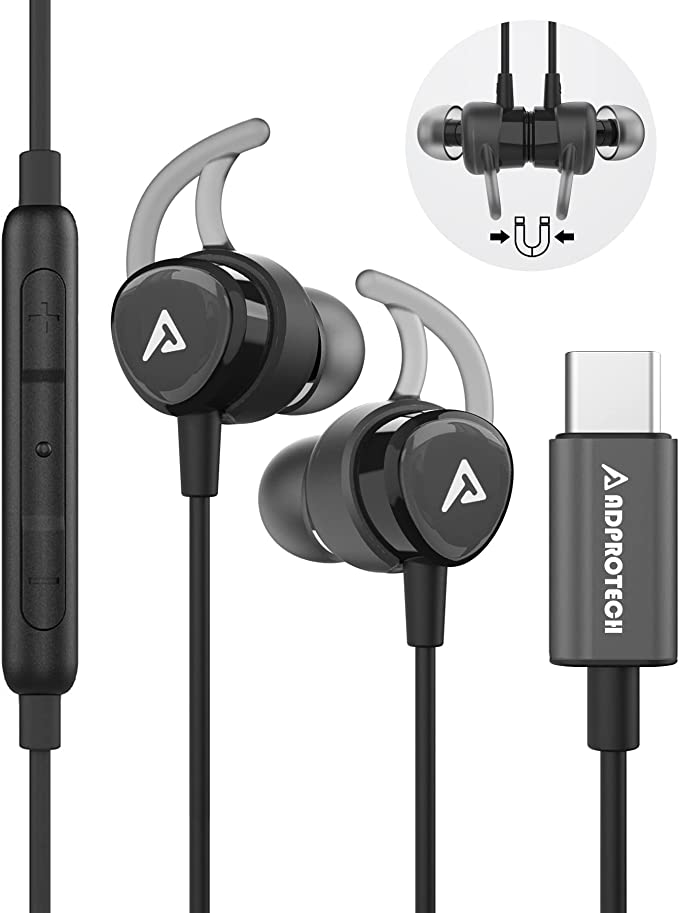
In the wake of the analog headphone jack’s disappearance, consumers largely bifurcated into two camps: those who embraced wireless technology and those who resorted to the “dongle life”—using adapters to bridge legacy 3.5mm hardware with modern USB-C ports. While adapters (specifically USB-C to Aux converters) offer a functional bridge, they introduce a host of engineering compromises that are often overlooked. A deeper analysis of signal integrity, impedance matching, and mechanical reliability reveals why native USB-C audio solutions, such as the ADPROTECH A0202002, represent a superior systemic approach to digital audio than the sum of adapters and legacy parts.
The Physics of Contact Resistance and Signal Integrity
In any electrical system, the ideal connection is a continuous, unbroken conductor. Every time a connector is introduced—a plug meeting a jack—it creates a break in this continuity, bridged only by mechanical pressure. This junction introduces “contact resistance.” A traditional setup involving a phone, a dongle, and a pair of 3.5mm headphones doubles the number of mechanical junctions in the signal path compared to a native USB-C headphone.
From a signal integrity perspective, each junction is a vulnerability. It is a point susceptible to oxidation, dust ingress, and micro-fretting (wear caused by microscopic movements). In the analog domain, where the signal voltage directly drives the speaker, increased contact resistance can lead to signal attenuation and channel imbalance. By integrating the DAC and the drivers into a single, continuous unit, native USB-C headphones eliminate the middle junction. The digital signal travels uninterrupted from the source to the headphone’s internal processor, ensuring that the analog conversion happens in a controlled, permanent environment, immune to the variables of a loose or dirty aux jack.
Impedance Matching and Acoustic Synergy
One of the most critical yet invisible advantages of native digital headphones is the concept of “system matching.” In a modular setup (phone + generic dongle + random headphones), the DAC inside the dongle is a “jack of all trades.” It must attempt to drive a vast range of loads, from sensitive 16-ohm in-ear monitors to demanding 300-ohm overhead cans. This universality often results in mediocrity: the amplifier may lack the voltage swing for high-impedance headphones (resulting in quiet, thin sound) or have a noise floor that is too high for sensitive ones (resulting in a constant background hiss).
Contrast this with a fully integrated system like the ADPROTECH model. The engineers designing the internal DAC and amplifier circuit know exactly which drivers they are powering. They can perfectly match the output impedance of the amplifier to the input impedance of the speaker coils. This bespoke pairing allows for optimization of the frequency response curve and power efficiency. The DAC doesn’t need to be over-engineered for unknown variables; it is precision-tuned for the specific “Hi-Fi Stereo” architecture of the earbuds it resides in. This holistic design philosophy—treating the DAC, amp, and driver as a single acoustic instrument—delivers a level of efficiency and fidelity that is statistically improbable to achieve with a random lottery of dongles and legacy headphones.

The Mechanical Liability of the “Leverage Effect”
Beyond electronics, the “dongle life” introduces a significant mechanical hazard known as the leverage effect. When a rigid adapter sticks out of a USB-C port, and a heavy headphone cable hangs from that adapter, it creates a long lever arm. Any lateral force applied to the cable—a snag on a doorknob or a tug from a bag—is multiplied by this lever, transferring amplified torque directly into the delicate internal tongue of the smartphone’s USB-C port. This is a leading cause of charging port failure in modern devices.
Native USB-C headphones are typically designed with stress relief and shorter, flexible connector housings that minimize this torque. The ADPROTECH design, for instance, focuses on a direct, lightweight connection that reduces the mechanical moment arm acting on the phone. Furthermore, by eliminating the heavy 3.5mm female jack mechanism found in dongles, the overall weight hanging from the phone is reduced. This “mechanical hygiene” extends the lifespan of the host device’s most critical port, a factor rarely considered until the port becomes loose or intermittent.
Latency and the Protocol Stack
While often associated with wireless audio, latency issues can also plague poorly implemented USB-C adapters. The USB Audio Class protocol requires a handshake between the host and the device. Inexpensive, generic adapters sometimes utilize generic controller chips with inefficient firmware, leading to negotiation delays or “sleep/wake” lag where the first fraction of a second of audio is cut off as the DAC wakes up.
Integrated headphones have the luxury of optimized firmware. Because the hardware is fixed, the “handshake” can be streamlined. For users relying on audio for real-time applications—such as gaming or video editing on a tablet—the predictability of a dedicated, hardwired USB-C peripheral offers a stability that generic adapters often struggle to match. The connection is not just physically more secure; it is digitally more responsive.
Conclusion: The Case for Unity
The allure of the usb c to aux adapter is understandable; it promises to extend the life of cherished legacy equipment. However, from a strict engineering standpoint, it is a solution of compromise. It adds resistance, introduces impedance variables, creates mechanical hazards, and disrupts the signal chain. The shift towards native USB-C headphones like the ADPROTECH A0202002 is not just about changing a plug; it is about embracing a unified system architecture. By consolidating the digital processing and acoustic reproduction into a single, cohesive entity, these devices offer a “path of least resistance” for sound—electronically, mechanically, and acoustically. In the quest for high fidelity and reliability, unity, it turns out, is the superior strategy.