The Art of Wearability: Ergonomics and Material Science in Headphone Design
Update on Dec. 25, 2025, 7:18 p.m.
When we evaluate headphones, we often obsess over drivers, codecs, and battery life. Yet, the most critical spec is often the one missing from the box: Wearability. If a headphone hurts after 30 minutes, its sound quality is irrelevant. It becomes a torture device, not an audio tool.
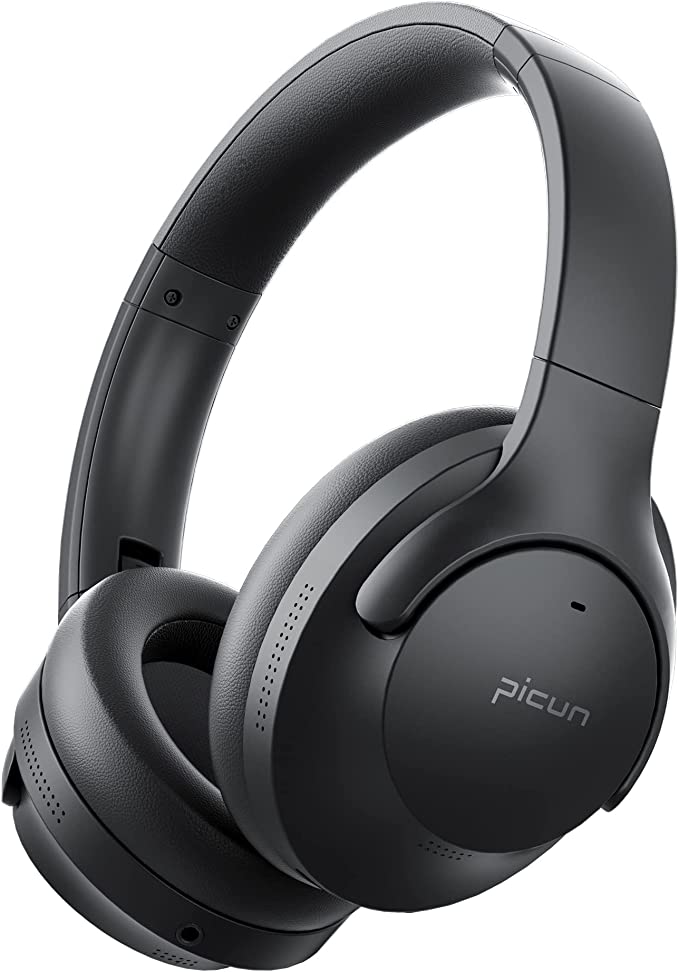
The science of comfort is a blend of anthropometry (the study of human body measurements) and material science. It is about distributing weight, managing heat, and creating a seal that is airtight but not crushing. Devices like the Picun ANC-05L Headphones prioritize this physical interface, utilizing advanced materials like Memory Foam to bridge the gap between the rigid machine and the soft human.

The Science of Memory Foam
Standard foam is like a spring; it pushes back immediately when compressed. Memory Foam (viscoelastic polyurethane foam) is different. It was originally developed by NASA to cushion astronauts during lift-off. * Viscosity: It resists flow. When you press it, it changes shape slowly. * Elasticity: It returns to its original shape, but with a delay.
In the earcups of the Picun ANC-05L, this material softens in response to body heat. It molds to the unique contours of the listener’s head—accommodating the jawbone, the temple, and the arms of glasses. This custom fit distributes the clamping force over a larger surface area, eliminating pressure points (hot spots) that cause headaches during long listening sessions.
The Passive Seal: The Foundation of Silence
Before Active Noise Cancellation (ANC) can do its job, the headphone must establish a physical barrier. This is Passive Noise Isolation.
The memory foam creates an acoustic seal. By conforming to the skin, it closes the gaps where sound waves could leak in.
* Bass Response: A tight seal is essential for bass. Low-frequency waves are long and lazy; if there is a leak, they escape, leaving the music sounding thin and tinny.
* High-Frequency Blocking: While ANC handles low-frequency rumbles, the physical mass of the earcup and foam blocks high-frequency sounds like voices or typing.
Structural Ergonomics: The Swivel and Tilt
Human heads are not blocks; they are complex, organic shapes. A rigid headphone frame cannot fit the population.
The 100° swiveling ear cups and flexible headband of the ANC-05L are examples of Kinematic Design. They allow the earcups to articulate on multiple axes:
1. Vertical Tilt: Adjusts to the angle of the jaw.
2. Horizontal Swivel: Adjusts to the width of the face and allows the headphones to lay flat on the collarbone when not in use.
This adjustability ensures that the clamping force is applied evenly around the ear, rather than pinching the top or bottom. It transforms the headphone from a static object into a dynamic wearable.

Conclusion: The Invisible Interface
Great ergonomic design is invisible. You don’t notice it; you only notice its absence (pain).
By investing in memory foam and articulated joints, the Picun ANC-05L aims for this invisibility. It seeks to remove the physical barrier between the listener and the audio, allowing the technology to dissolve until only the music remains. In the end, comfort is not a luxury; it is the prerequisite for immersion.