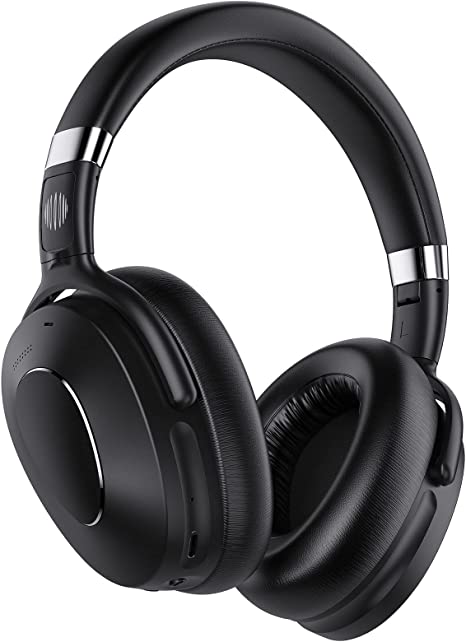
Built for the Bell: The Engineering of Durability and Maintenance in Educational Audio
Update on Jan. 4, 2026, 11:17 a.m.
A classroom is one of the most hostile environments for electronics. Devices are dropped, cords are yanked, and plugs are twisted. They are used by hundreds of different hands, year after year. In this context, consumer-grade earbuds survive for weeks. Institutional-grade equipment must survive for semesters.
The Maeline Bulk Wired Headphones are engineered specifically for this rigorous ecosystem. Their design philosophy prioritizes Mechanical Ruggedness and Maintenance Simplicity over aesthetic trends. They are the “work boots” of the audio world.
This article dissects the “Engineering of Endurance.” We will explore the physics of the Boom Microphone, the importance of Strain Relief, and why the “Wired & Battery-Free” architecture is the only scalable solution for schools.
The Boom Mic: Inverse Square Law in Action
In remote learning or language labs, the microphone is as important as the speaker. Maeline uses a Boom Microphone rather than an inline mic on the cable. This is a physics decision based on the Inverse Square Law.
Proximity Effect
The intensity of sound drops off with the square of the distance.
* Inline Mic: Located on the chest, ~20cm from the mouth. It picks up the voice, but also the rustling of clothes and the chatter of the student next door.
* Boom Mic: Located ~2cm from the mouth. The signal (voice) is exponentially stronger.
This proximity allows for a much higher Signal-to-Noise Ratio (SNR) at the source. It ensures that the software (e.g., speech-to-text or language analysis) receives a clean input without requiring aggressive digital noise reduction that can distort the voice. For educational assessment, this clarity is non-negotiable.

The Weakest Link: Cable Physics and Strain Relief
The number one failure point for headphones is the cable connection. Students often unplug headphones by pulling the cord, not the plug. * Reinforced Cord: The Maeline uses a “thick reinforced cord.” This likely involves internal strands of Kevlar or nylon mixed with the copper, increasing the Tensile Strength. It prevents the copper conductors from snapping under tension. * L-Shaped Plug: The 3.5mm plug is angled. Physics dictates that an L-shaped plug has a lower profile (lever arm) than a straight plug. When a device is dropped or bumped, the torque applied to the internal jack is significantly reduced, saving both the headphone and the valuable iPad or Chromebook port. * Strain Relief: The thick rubber molding where the wire enters the plug dissipates the bending force, preventing the wire from fraying at the junction.

The Logic of “Dumb” Tech: No Battery, No Drivers
In an IT deployment of 500 units, complexity is the enemy. * Zero Maintenance: Wireless headphones require charging. Managing the charging cycle of 30 headsets in a single classroom is a logistical nightmare. The Maeline is Passive. It draws micro-power from the audio jack. It is always ready. 100% Uptime. * Universal Compatibility: Bluetooth requires pairing, drivers, and troubleshooting interference. The 3.5mm TRRS analog standard works on everything from a 10-year-old PC to a brand-new iPad (with adapter). It is “Protocol Agnostic.” This ensures that precious class time is spent learning, not troubleshooting Bluetooth connections.
Hygiene and Materials
In a shared environment, hygiene is a safety issue. * Leatherette Pads: Unlike foam or fabric, the synthetic leather ear pads are non-porous. They do not absorb sweat or oils. This makes them easy to wipe down with disinfectant between uses, preventing the spread of bacteria. * Hard Plastic: The headband and cups are smooth plastic, minimizing crevices where grime can accumulate.
Conclusion: Infrastructure, Not Accessory
The Maeline Bulk Wired Headphones are not accessories; they are infrastructure. Like the desks and the whiteboard, they are built to facilitate the function of the room.
By leveraging the acoustic advantage of the boom mic, the mechanical durability of reinforced cabling, and the logistical simplicity of wired connectivity, they solve the unique engineering challenges of the classroom. They prove that in education, the best technology is the kind that works so reliably, you forget it’s there.