Severing the Cord: The Engineering of Autonomous Audio and Extreme Waterproofing
Update on Jan. 4, 2026, 11:19 a.m.
In our interconnected world, we are accustomed to our devices being dumb terminals for the cloud. Our headphones stream from our phones, which stream from servers. The “content” is never really there. But there is one frontier where the cloud cannot reach, where the signal dies, and the device must stand alone: Underwater.
The IKXO Y8 Bone Conduction Headphones feature a specification that feels like a throwback to 2005: 32GB of Built-in Memory. In an era of Spotify and 5G, this seems archaic. However, for a swimming headphone, it is not nostalgia; it is a solution to the laws of physics.
This article explores the “Engineering of Independence.” We will dissect why Bluetooth fails in water, the rigorous construction required for IP68 Waterproofing, and why the “Phone-Free” architecture of the Y8 is its most critical feature.
The Physics of the disconnect: Water vs. 2.4GHz
Bluetooth operates at 2.4 GHz. This is a resonant frequency for water molecules (it’s how microwave ovens heat food). When a Bluetooth signal hits water, it doesn’t just slow down; it is absorbed and scattered. * Attenuation: The signal strength drops by half every few centimeters in water. Even if your phone is strapped to your arm, a few inches of water during a freestyle stroke can cut the connection. * The Faraday Effect: Water with dissolved ions (chlorine, salt) is conductive. It acts as a shield, blocking electromagnetic waves.
The Autonomous Solution
The only engineering solution is Local Storage. By embedding a 32GB NAND Flash chip directly into the headset, the IKXO Y8 eliminates the need for transmission. The data path becomes microscopic—from the memory chip to the DAC (Digital-to-Analog Converter) on the same circuit board.
This “MP3 Mode” transforms the headset from a peripheral into a standalone computer. It offers Digital Autonomy. You don’t need your phone. You don’t need the internet. You just need your files. This reliability is paramount when you are in the middle of a 2km swim.
IP68: Engineering for Pressure and Corrosion
The Y8 carries an IP68 rating. * 6: Dust Tight. * 8: Immersion beyond 1m (Continuous).
The Challenge of Sealing
Designing for IP68 is exponentially harder than IPX4 (splash proof).
1. No Moving Parts: The Y8 likely uses capacitive touch controls or sealed membrane buttons. Traditional mechanical switches are leak points.
2. Magnetic Charging: The most vulnerable point of any device is the charging port. USB-C ports trap water and corrode. The Y8 uses Magnetic Pogo Pins. These are gold-plated contacts that sit flush with the surface. They can be wiped dry instantly. This eliminates the “cavity” where water loves to hide and destroy electronics.
3. Corrosion Resistance: Swimming pools are harsh chemical environments (Chlorine). Oceans are worse (Salt). The materials used—likely silicone-coated plastics and corrosion-resistant alloys—must withstand chemical attack, not just water ingress.
The User Interface of No-Screen Devices
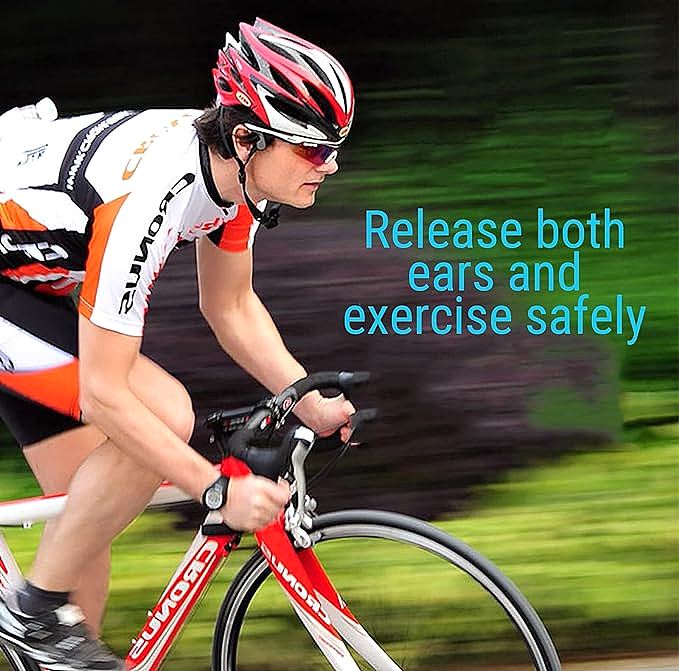
Operating a device with 8000 songs and no screen requires a specific User Interface (UI) philosophy.
* Tactile Feedback: When swimming, you can’t see the buttons. The controls must be distinct to the touch.
* Auditory Feedback: Since there is no screen, the device must talk to you. “Power On,” “Bluetooth Mode,” “MP3 Mode.” These voice prompts are the only way the user knows the state of the machine.
The Y8’s simplicity—likely just Volume +/-, Power, and Mode Switch—is a feature. Complex menus are impossible to navigate while doing laps.
Conclusion: The Resilience of the Standalone
The IKXO Y8 is a reminder that in extreme environments, “Smart” (connected) features often fail, and “Dumb” (standalone) reliability wins.
By embracing the physics of water—both its hostility to radio waves and its conductivity to sound—the Y8 carves out a niche that modern smartphones cannot touch. It is a piece of Survival Technology for your music, ensuring that even when you leave the dry, connected world behind, the beat goes on.