The Physics of Comfort: Why Semi-In-Ear Audio Persists in a Sealed World
Update on Jan. 4, 2026, 12:08 p.m.
In the modern landscape of personal audio, silence is often sold as the ultimate luxury. Active Noise Cancellation (ANC) and silicone-tipped in-ear monitors (IEMs) promise to hermetically seal us off from the chaos of the environment. Yet, despite the dominance of these “sealed” designs, the classic semi-in-ear form factor refuses to fade away. In fact, it is experiencing a renaissance among users who prioritize situational awareness and long-term comfort over absolute isolation.
The endurance of the semi-in-ear design is not borne of nostalgia; it is rooted in ergonomics and acoustics. It represents a different philosophy of listening—one that integrates music into the environment rather than replacing it. Devices like the SoundPEATS Air3 Deluxe HS Wireless Earbuds champion this approach, utilizing advanced engineering to solve the traditional weaknesses of open designs while maximizing their inherent strengths. To understand this choice, we must look at the intricate relationship between the human ear, air pressure, and sound waves.
The Anatomy of Fatigue: The “Occlusion Effect”
The primary argument for semi-in-ear designs begins with biology. The human ear canal is a sensitive, self-cleaning organ meant to be open to the air. When we plug it tightly with a silicone tip, we create a closed chamber. This leads to several physiological phenomena that can cause discomfort over time.
The Pressure Chamber
In a sealed IEM, the movement of the driver creates pneumatic pressure directly against the eardrum. While this is excellent for transmitting bass, it can induce “listener fatigue”—a physical tiredness of the ear mechanism—after prolonged sessions. Furthermore, the “occlusion effect” occurs: the booming, hollow sound of your own voice, chewing, or footsteps trapped inside your head.
The Breathability Factor
Semi-in-ear designs, by contrast, sit outside the deeper part of the ear canal. They do not create an airtight seal. This allows for airflow, equalizing pressure between the inner ear and the outside world. This “ventilation” significantly reduces fatigue and prevents the buildup of heat and moisture, making this form factor superior for users who wear earbuds for hours at a time—whether for marathon gaming sessions or consecutive conference calls.
The Acoustic Trade-Off: Leaks vs. Soundstage
From an audio engineering perspective, the lack of a seal presents a fascinating challenge: bass leakage. Low-frequency sound waves are omnidirectional and lose energy rapidly if they are not contained. In an open fit, bass tends to escape before it hits the eardrum. However, this “flaw” creates a unique acoustic advantage: Soundstage.
The Open Soundstage
Because the sound is not injected directly into the brain via a sealed tube, semi-in-ear headphones often produce a more expansive, airy soundstage. The music feels like it is originating from around you, rather than from the center of your skull. This natural spatial presentation is highly prized by audiophiles who prefer a “speaker-like” listening experience.
Compensating for the Bass Gap
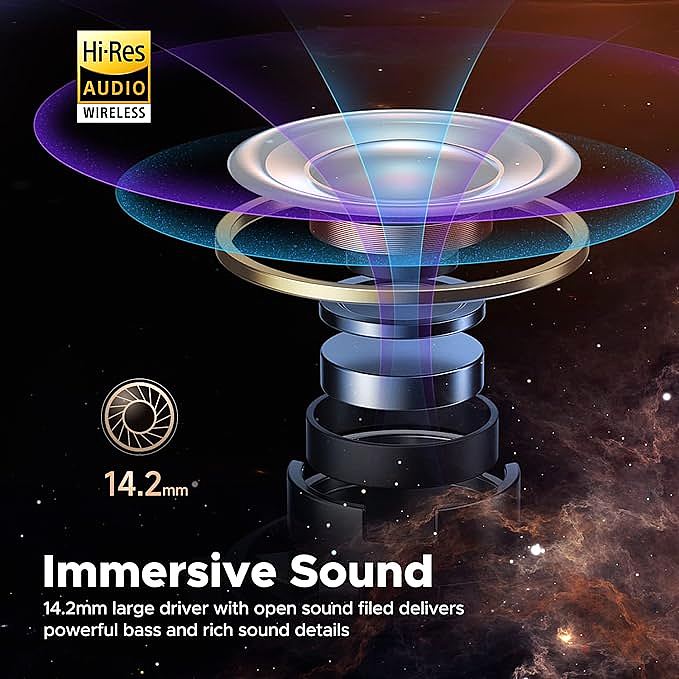
To retain the benefits of an open soundstage without sacrificing the rhythm and punch of the music, engineers must compensate for the bass leakage. This is where driver size becomes the critical variable. A small driver simply cannot move enough air to overcome the leakage.
This explains the engineering choice behind the 14.2mm dynamic driver found in the SoundPEATS Air3 Deluxe HS. This is significantly larger than the drivers found in most sealed earbuds. The massive surface area allows the diaphragm to push a substantial volume of air, creating powerful low-frequency waves that can survive the journey across the open gap of the ear canal. It is a brute-force solution to a physics problem: if the seal won’t hold the bass in, the driver must generate enough bass to saturate the space.
Situational Awareness: The Safety of “Open”
Beyond acoustics and comfort, the semi-in-ear design offers a functional utility: safety. In urban environments, total isolation can be dangerous. The ability to hear an approaching car, a subway announcement, or a colleague calling your name is vital.
Semi-in-ear designs provide “passive transparency.” Unlike “Transparency Mode” in ANC headphones—which uses microphones to digitally process and re-inject outside noise—semi-in-ear headphones allow environmental sounds to enter naturally. This results in a more organic awareness of one’s surroundings. There is no digital hiss or artificial amplification of wind noise; just the natural blend of your soundtrack and your reality.
The Modern Synthesis: Adding Brains to the Brawn
Historically, semi-in-ear buds were “dumb” devices—simple speakers on a stick. However, modern iterations have integrated smart technologies to enhance their utility without compromising their form factor.
Intelligent Noise Management
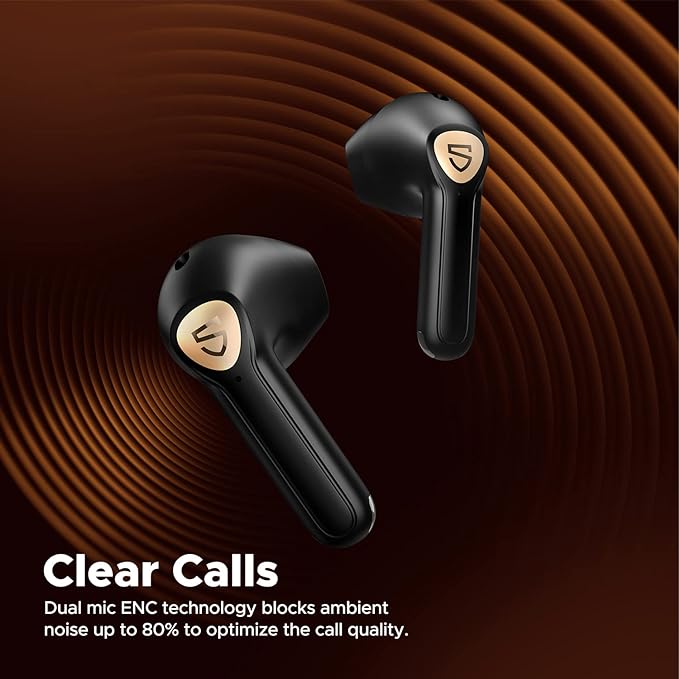
While they cannot offer passive noise isolation, devices like the SoundPEATS Air3 Deluxe HS employ sophisticated Dual Mic ENC (Environmental Noise Cancellation) for transmission. This ensures that while you can hear the world, the person on the other end of your call only hears you. By using beamforming arrays, these earbuds mathematically subtract the background chaos, solving the communication challenge inherent in open designs.
Seamless Integration
The integration of sensors, such as In-Ear Detection, further bridges the gap between the casual open-ear form factor and premium functionality. The ability to auto-pause when an earbud is removed mimics the intuitive interaction of high-end sealed units, proving that “comfortable” doesn’t have to mean “low-tech.”

Conclusion: The Choice for Long-Term Listening
The audio market is not a monolith; it is a spectrum of needs. While sealed IEMs dominate the “commuter” segment where silence is golden, the semi-in-ear design reigns supreme in the “lifestyle” segment where comfort is king.
The resurgence of this form factor, powered by large-format drivers like the 14.2mm units in the SoundPEATS Air3 Deluxe HS, validates the idea that we don’t always want to be cut off from the world. Sometimes, we want our music to breathe. We want to wear our soundtrack all day without ear fatigue. By balancing the physics of air movement with the biology of the ear, modern semi-in-ear headphones offer a compelling argument for letting a little bit of the world in.