The Chemistry of Failure: Analyzing Sweat Corrosion and IPX7 in Wearables
Update on Jan. 4, 2026, 12:13 p.m.
In the lifecycle of sports electronics, the most common cause of death is not impact or battery failure; it is corrosion. The user reviews for the Lecover Power Q20 Pro, like many in its class, contain reports of charging failures after months of use. This is rarely a defect of the battery itself, but rather a predictable outcome of electrochemistry.
Understanding the science of corrosion and the limits of IPX7 waterproofing empowers the user to prevent these failures. This article deconstructs the interaction between sweat, electricity, and metal, providing a technical guide to device longevity.
The Electrolytic Cell on Your Ear
When you exercise, your sweat glands excrete a solution containing sodium ($Na^+$), chloride ($Cl^-$), and potassium ($K^+$). This saline solution is highly conductive.
The Q20 Pro charges via exposed metal contact pins. When you place a sweaty earbud into the charging case:
1. The Electrolyte: Sweat bridges the gap between the positive and negative charging pins.
2. The Voltage: The case applies 5V to the pins to charge the bud.
3. Electrolysis: This setup creates a miniature electrolytic cell. The electric current drives a chemical reaction. The metal of the contact pins (usually gold-plated copper) begins to dissolve (anodic dissolution).
Over time, this creates a non-conductive oxide layer (black or green gunk) on the pins. The result? The earbud stops charging, or one side “dies.” * The Solution: The “IPX7” rating protects the inside of the bud, but it cannot protect the external contacts from this reaction. The only defense is mechanical: wiping the contacts dry before charging. This simple act breaks the electrolytic circuit.
Decoding IPX7: The Depth of Protection
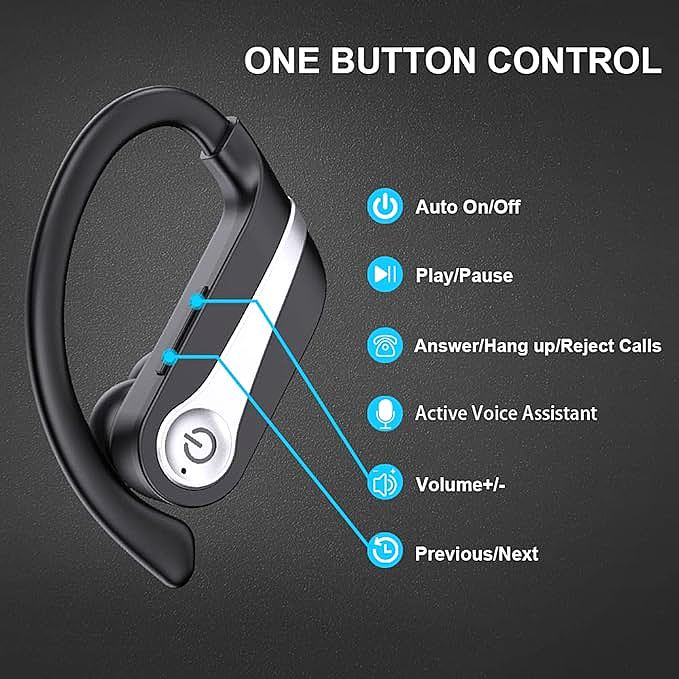
The Q20 Pro claims IPX7 waterproofing. As established, this means immersion in 1 meter of water for 30 minutes. * Hydrostatic Pressure: At 1 meter, water exerts about 1.4 PSI of pressure. The seals (ultrasonic welds and gaskets) are designed to resist this. * Dynamic Pressure: However, swimming strokes or high-velocity water jets (like a shower) can exceed this pressure locally. While IPX7 is robust for rain and sweat (which are low pressure), it is not a guarantee against all aquatic environments. * Nano-Coating: The “nano-coating material” acts as a hydrophobic shield. It increases the contact angle of water droplets, forcing them to bead up and roll off rather than spreading into crevices. This is particularly effective against sweat, which has a lower surface tension than pure water due to oils and salts.
Energy Density: The 40-Hour Math
The Q20 Pro offers 10 hours per bud and 40 hours total. This stamina is a function of the earhook form factor. * Volumetric Efficiency: The external earhook body allows for a larger battery cell than a tiny in-ear bean. Lecover likely uses a cylindrical or prismatic Lithium-Ion cell with a capacity of 50-60mAh per side. * The Charging Case: To provide 3 additional full charges, the case must house a battery of at least 400-500mAh. The LED Power Display is crucial here. It acts as a “fuel gauge,” allowing the user to manage the energy cycle. Unlike simple LED dots, a percentage display provides precise data, reducing “range anxiety” before a long run.
Conclusion: Maintenance is Engineering
The Lecover Power Q20 Pro is a robust piece of engineering, but it is not immune to the laws of chemistry. Its IPX7 rating and 14.2mm drivers provide the foundation for a great sports experience. However, its longevity is a partnership between the engineer and the user.
By understanding the mechanism of galvanic corrosion, the user can take simple steps (wiping contacts) to ensure the device lasts for years, not months. It is a reminder that in the battle against the elements, knowledge is the best durability feature.