The Geometry of Durability: Why the Daiwa BG3000 Punches Above Its Class
Update on Feb. 1, 2026, 3:11 p.m.
Saltwater is the ultimate truth-teller for fishing gear. It corrodes, it intrudes, and it exploits every microscopic weakness in a mechanical system. In the sub-$150 spinning reel market, most contenders rely on plastic bodies and marketing buzzwords to hide their fragility. The Daiwa BG3000 takes a different approach. It relies on simple, brutal geometry.
The “BG” stands for Black Gold, a heritage line that has existed for decades. But the modern iteration, specifically the 3000 size, represents a sweet spot in mechanical engineering: large enough to handle inshore species like Redfish and Snook, yet compact enough for all-day casting. Its dominance isn’t magic; it’s the result of two specific physical traits: Rigidity and Contact Area.
The Myth of “Lightweight” vs. The Reality of Rigidity
In recent years, the industry has obsessed over shaving ounces, often replacing metal with carbon composites. While light is good, flex is the enemy. When you are winching a 20lb Striped Bass against a ripping current, a composite body can flex slightly. This flex misaligns the internal gears—even by a fraction of a millimeter—causing grinding, power loss, and rapid wear.
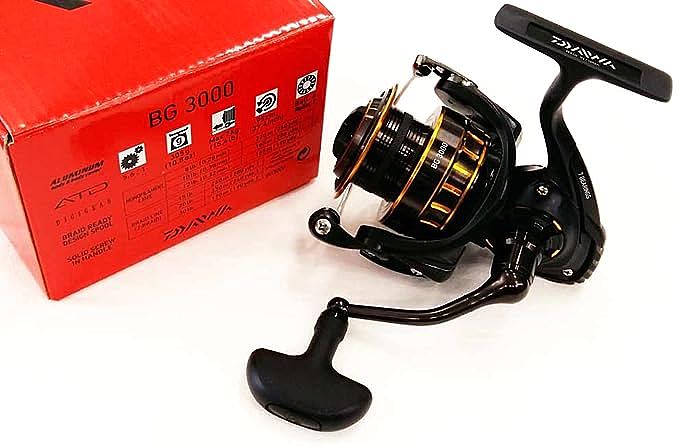
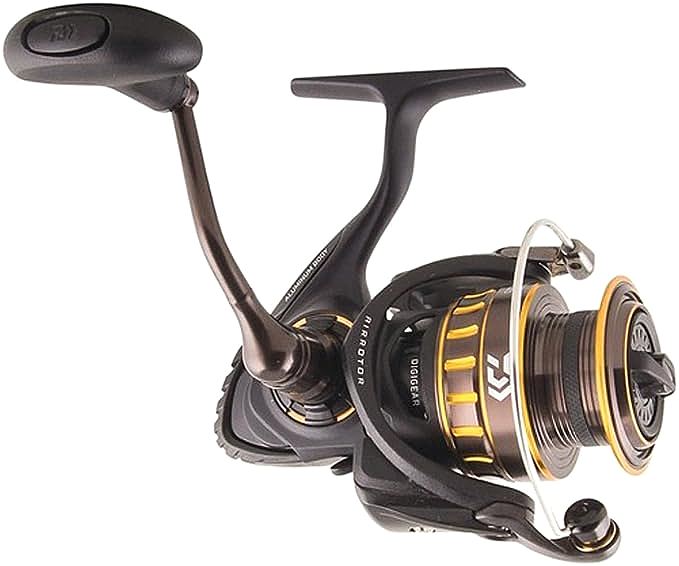
The BG3000 utilizes a “HardBodyz” anodized aluminum frame. It is unapologetically metal. It holds the geartrain in perfect alignment regardless of the load. This rigidity ensures that 100% of your cranking energy is transferred to the fish, not wasted bending the reel stem.
The Oversized Digigear: A Matter of Surface Area
The engine of this reel is the Digigear system. What separates the BG from competitors (like the Penn Battle II or III) is the physical size of the drive gear. Daiwa engineers deliberately oversized the gear relative to the body size. * Physics of Contact: A larger gear has larger teeth and a greater circumference. This increases the “contact patch” between the drive gear and the pinion gear. * The Result: More surface area means stress is distributed more widely. This results in higher torque (winching power) and significantly longer lifespan. It feels smoother not because of more bearings, but because the mechanical leverage is superior.
The Sizing Anomaly: A Crucial Consumer Warning
If you are accustomed to Shimano or Penn sizing, you need to recalibrate before buying a BG. Daiwa BG reels run large.
A BG3000 is physically comparable to a 4000-size reel from most other brands.
* Line Capacity: It holds approx 280 yards of 15lb braid, massive for a “3000” class reel.
* The Benefit: You get the line capacity and drag power of a larger reel in a package that balances well on a 7-foot medium-heavy rod.
* The Warning: Do not buy the 4000 thinking it is a standard medium reel; it is a beast. For most inshore and freshwater applications, the 3000 is the versatile king.
Conclusion: The Industry Outlook
The Daiwa BG3000 remains the benchmark for “value performance.” It proves that you don’t need MagSealed technology or carbon-fiber rotors to build a reel that lasts. You just need to machine the metal correctly, make the gears big, and keep the tolerances tight. It is a reel that respects the physics of fishing.