Active Noise Cancelling (ANC) vs. Passive Isolation: Which Is Better?
Update on Dec. 13, 2025, 1:04 p.m.
“Noise cancelling” is one of the most powerful and misleading terms in all of tech.
You see it on $300 headphones from Sony and Bose, promising a magical bubble of silence on your flight. You also see it on $30 “Studio” headphones, like the OneOdio Pro-10.
How can both be true? Are you getting a $270 discount, or is something else going on?
The truth is, “noise cancelling” is used to describe two fundamentally different technologies that solve two fundamentally different problems.
Choosing the right one won’t just save you money—it will get you the right kind of quiet for your life.
Secret #1: Active Noise Cancelling (ANC) is “Electronic Magic”
This is the technology you see in expensive travel headphones.
- How it Works: ANC is active. It uses tiny microphones on the outside of the headphones to “listen” to the world around you. A sophisticated computer chip then “hears” the incoming sound wave (like an airplane engine) and, in milliseconds, generates a perfectly opposite sound wave (a “phase-inverted” signal).
- The Analogy: Think of it as sound math: +1 (the engine) + (-1) (the anti-noise) = 0 (silence).
- What It’s GOOD At: Constant, low-frequency rumbles. It’s a miracle against airplane engines, train rumbles, and office air conditioners.
- What It’s BAD At: Sudden, high-frequency sounds. It cannot effectively block people talking, dogs barking, or keyboards clacking.
- The Cost: It requires a battery, adds cost, and can create a subtle “pressure” feeling in your ears.
Secret #2: Passive Noise Isolation is “Physical Defense”
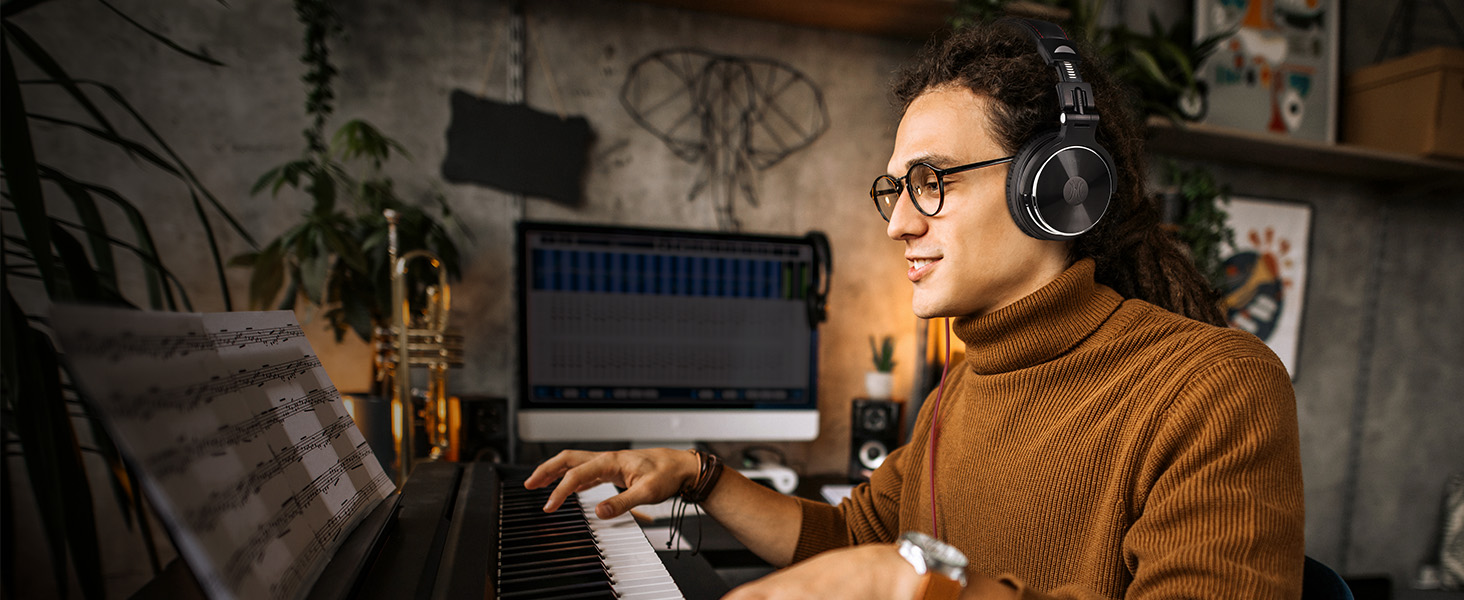
This is the technology you see in studio and DJ headphones. It’s not a “feature”—it’s a design philosophy.
- How it Works: Isolation is passive. It’s a wall. It uses a Closed-Back design (the earcups have no vents), dense earcup materials, and thick, soft padding (like the
soft padded ear cushionson the Pro-10) to create a perfect physical seal around your ear. - The Analogy: It’s not magic. It’s the same principle as closing a window to block street noise.
- What It’s GOOD At: Blocking the entire sound spectrum, but it’s especially effective against high-frequency sounds like human voices and keyboards.
- What It’s BAD At: It can’t “erase” a low, constant rumble as magically as ANC can.
- The Cost: Zero. It’s just a mark of good, solid design.
Why Studio Professionals CAN’T Use ANC
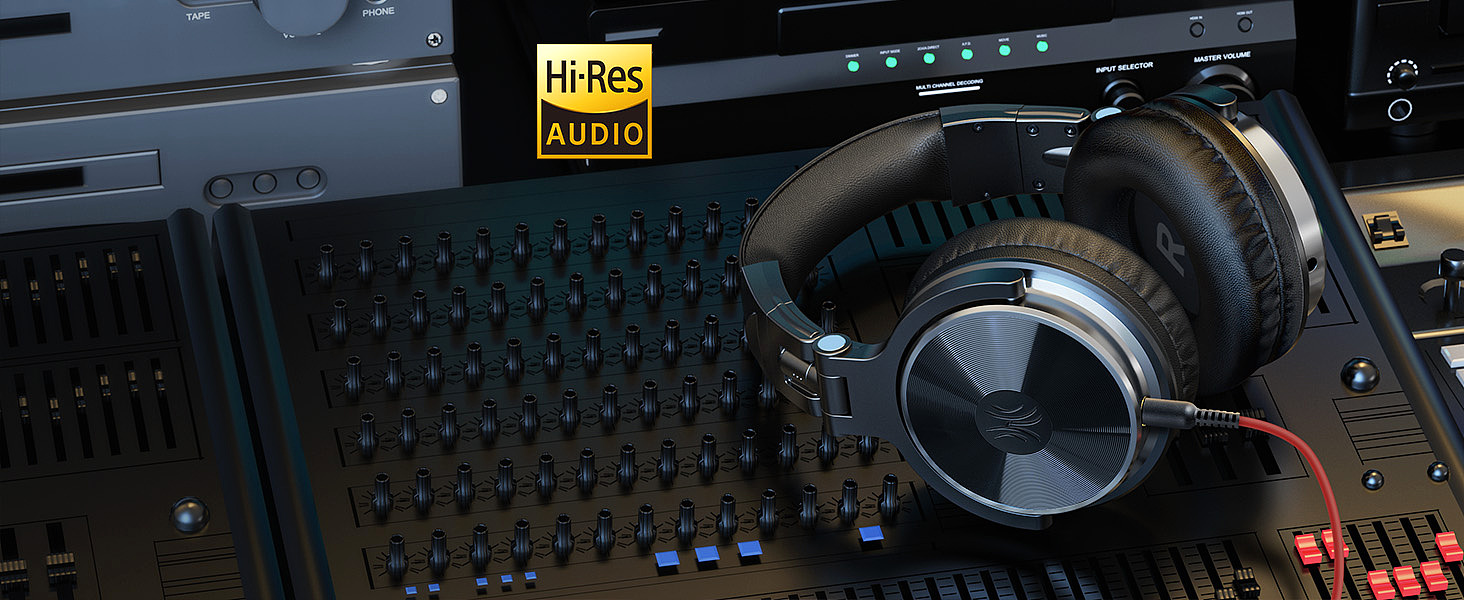
This is the key. Why do “Pro” headphones like the OneOdio Pro-10 not have the “better” ANC technology?
Because for a musician, DJ, or podcaster, ANC is a disaster.
1. It Causes Latency: The “listening” and “inverting” process, while fast, is not instant. This tiny delay (latency) makes it impossible to record an instrument or beat-match a song.
2. It “Colors” the Sound: The “anti-noise” wave ANC creates isn’t perfect. It subtly interferes with your music, changing the sound in ways the artist never intended.
A DJ or podcaster needs Passive Isolation. They need to block the loud club music or the sound of their own voice in the room so they can hear what’s in the headphones perfectly, with zero delay and zero coloration.
Which “Quiet” Do You Actually Need?
So, back to the $30 vs. $300 question. It’s not about which is “better,” but which is “right for the job.”
You need ACTIVE NOISE CANCELLING (ANC) if: * You are a Traveler or Commuter. * Your main enemy is the constant, low rumble of an engine. * You are willing to pay for the battery and the tech.
You need PASSIVE NOISE ISOLATION if: * You are a Student, Creator, Musician, or DJ. * Your main enemy is sudden, high-frequency noise (people, typing, C). * You need to hear your audio exactly as it was recorded, with zero latency. * You want to get professional-grade sound blocking without the $300 price tag.
When you see a “studio” headphone, you’re not getting “cheap” noise cancelling. You’re getting a different kind of noise blocking—one that’s designed for focus and audio purity, not just for sleeping on a plane.